



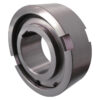

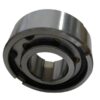
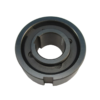


TFS TSS Series Cam Clutch TFS40: Precision Industrial Overrunning Clutches
Explore the high-precision TFS TSS series cam clutch TFS40 by LST Sprag Clutch. Precision bearing steel one-way clutches matching 62 and 63 series bearings.
TFS TSS Series Cam Clutch TFS40: Precision Overrunning Clutches for Industrial Power Transmission
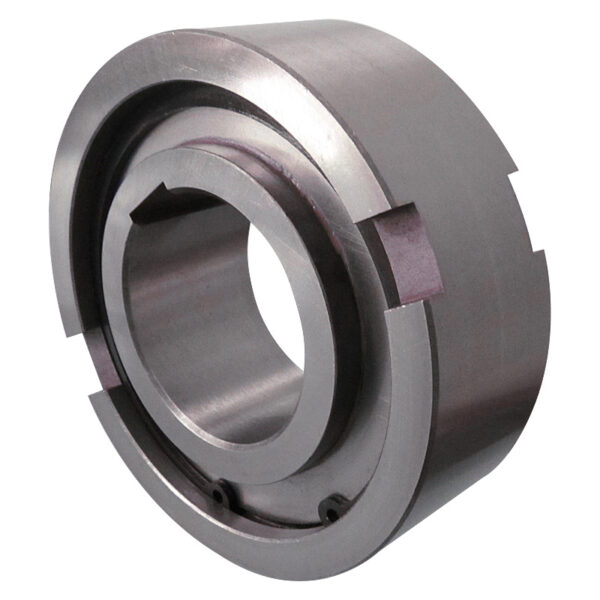
In high-performance industrial drive systems, reliable unidirectional torque transmission, rapid indexing, and instantaneous backstopping are critical for operational safety and mechanical longevity. The TFS TSS series cam clutch TFS40, manufactured by LST Sprag Clutch, is an engineered freewheel solution designed to meet demanding mechanical power transmission requirements. Constructed from vacuum-degassed, high-grade bearing steel, the TFS and TSS product lines integrate precision-machined cam profiles that deliver instantaneous wedging action, exceptionally low overrunning drag, and dependable holdback functionality across high-duty machinery cycles.
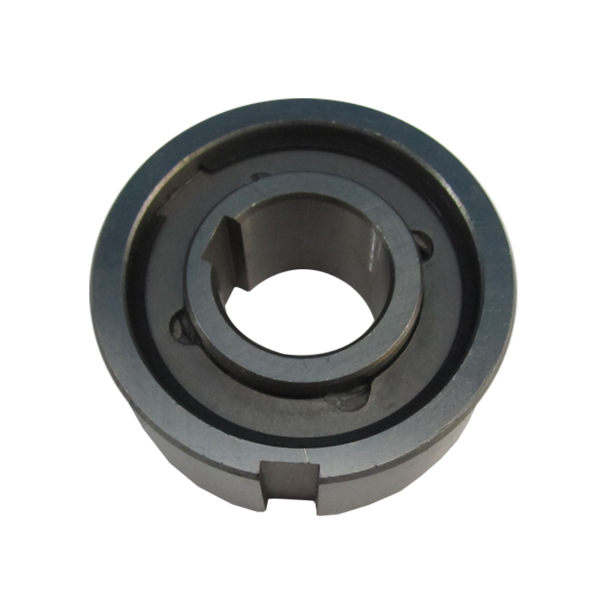
Designed to conform dimensionally to standard industrial ball bearing profiles, the Cam clutch TFS and Cam clutch TSS families eliminate the need for complete redesigns of existing housings and shaft configurations. The sprag one way clutch TFS40 incorporates a 40 mm nominal bore matched to standard 63-series bearing envelope dimensions, delivering an optimized rated torque of 607 Nm within a compact footprint. Whether deployed in continuous overrunning, high-frequency indexing, or critical holdback applications, LST Sprag Clutch components provide mechanical engineering integrity for OEMs, system integrators, and industrial replacement distributors worldwide.
Overcoming Critical Drive Challenges: Mechanical Reliability and Space Constraints
Industrial drivetrains face continuous operational degradation caused by mechanical slippage, dynamic reverse loading, and localized thermal buildup. Design engineers and plant operators often grapple with conventional mechanical clutches that introduce excessive backlash or require disproportionate physical space. The TFS and TSS series directly mitigate these operational vulnerabilities:
- Elimination of Reverse Mechanical Runaway: In inclined bucket elevators, vertical conveyors, and multi-stage reducers, unexpected power interruptions generate catastrophic reverse torque. Cam-action one-way clutches provide instantaneous mechanical engagement with zero reverse play, protecting prime movers and structural gear teeth from reverse impact loads.
- Envelope Optimization for Compact Gearboxes: Conventional standalone backstops often demand extensive external brackets and auxiliary couplings. The TSS and TFS series match the radial and axial cross-sections of standardized 62-series and 63-series ball bearings, enabling plant designers to embed overrunning functionality directly within standard bearing pockets.
- Minimization of Rotational Drag during Freewheeling: Continuous-duty machines require minimal energy losses when operating in overrunning mode. The internal geometry of LST Sprag Clutch cams ensures low lift-off resistance and reduced friction during freewheeling, mitigating heat generation and extending component service life.
- Predictable Torque Distribution: Through precision metallurgy and multi-cam arrays, drive torque is distributed uniformly across the entire raceway surface, avoiding localized stress spikes that lead to micro-pitting and early race fatigue.
Core Mechanical Principles and Kinematic Engineering
The operational mechanics of the TFS and TSS cam clutches rely on precision-ground internal cams (sprags) positioned between concentric inner and outer races. Both races and cam elements are fabricated from premium-grade bearing steel, heat-treated through induction and case-hardening methods to achieve high surface hardness and fatigue resistance under cyclic compressive stresses.
Cam Wedging and Freewheel Kinematics
During relative rotation in the drive direction, the sprag cam profiles wedge securely between the inner and outer raceways via friction-induced mechanical lockup. Because the contact angle is precisely calculated against the friction coefficient of hardened bearing steel under hydrodynamic lubrication, engagement is instantaneous with negligible slip. When rotational direction reverses or the driven element overruns the driving element, the cams pivot out of wedging contact, allowing frictionless or near-frictionless relative rotation.
Dimensional Integration with Standard Bearing Envelopes
A distinctive design advantage of these product families is envelope matching:
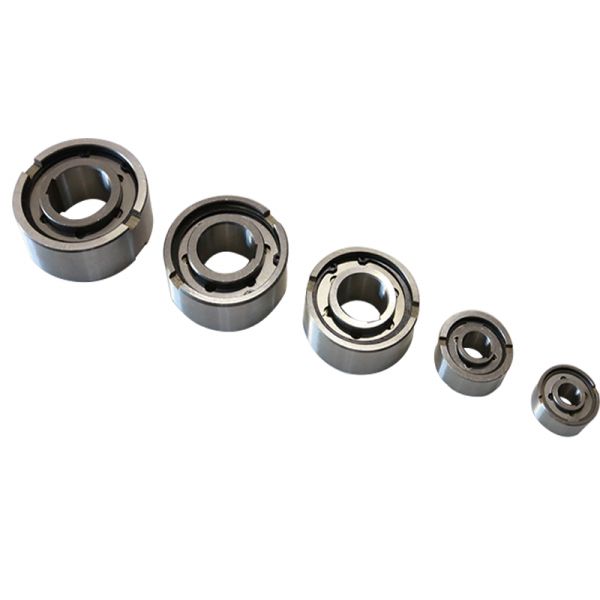
- TSS Series (62-Series Envelope): Engineered to replicate the boundary dimensions (inner diameter, outer diameter, and width) of standard 62-series deep groove ball bearings. The series accommodates shaft diameters from 8 mm up to 60 mm, with torque outputs scaling progressively from 6 Nm to 649 Nm.
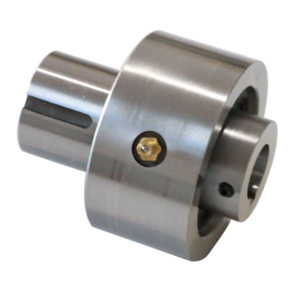
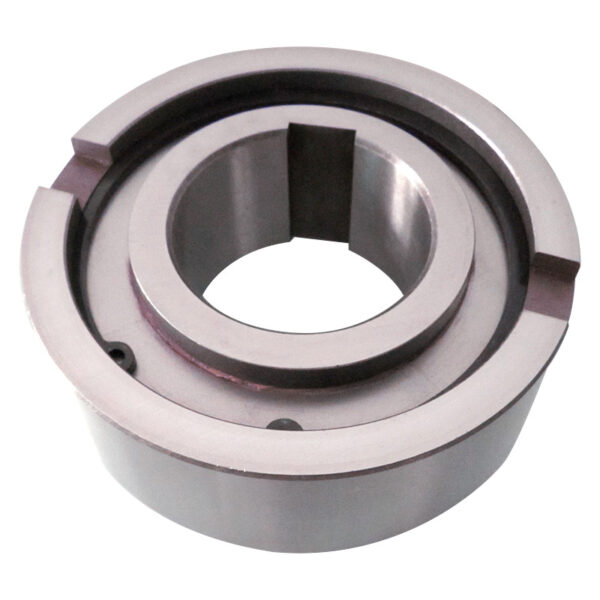
- TFS Series & TFS40 (63-Series Envelope): Engineered to match standard 63-series bearing outer boundary profiles. The sprag one way clutch TFS40 features a 40 mm inner bore and incorporates double keyways on the outer race. These external keyways ensure positive mechanical torque transmission into the machine housing or adjacent driven element, bypassing the risk of slippage associated with plain friction press-fits under fluctuating torsional loads.
Operational Modes: Overrunning, Indexing, and Backstopping
The versatile cam dynamics of the TFS and TSS units support three distinct mechanical functions:
1. Overrunning (Freewheeling)
In dual-drive systems (such as main motor and crawl-drive auxiliary units) or high-inertia applications, the clutch seamlessly disconnects the driven member when its speed exceeds that of the driver. This prevents high-inertia machinery (e.g., heavy industrial fans, centrifuges) from back-driving and damaging driving motors or gear reduction stages upon shutdown.
2. Indexing (Reciprocating to Stepwise Rotary Motion)
In indexing drives, linear or oscillating rotary strokes (from pneumatic cylinders, linkages, or cams) are translated into unidirectional, incremental rotational steps. The instantaneous engagement profile of LST bearing-steel cams ensures high pitch accuracy and repetitive positional stability in packaging indexing feed rollers and textile feed tables.
3. Backstopping / Anti-Reverse (Holdback)
When integrated into continuous material handling drives, the clutch allows the drive shaft to rotate unimpeded in the forward direction. The instant forward motion ceases or reverses due to gravity-driven back-torque, the internal cams lock immediately against the housing, preventing reverse rotation and protecting industrial personnel and downstream equipment.
Industrial Applications Across Global Machinery Sectors
LST Sprag Clutch components are engineered for integration across diverse OEM machinery lines:
- Packaging and Labeling Equipment: Deployed on intermittent film-feed shafts, rotary sealers, and carton accumulators where rapid, non-slip indexing action dictates overall production throughput.
- Textile Machinery: Integrated into carding frames, spinning reels, and weaving loom feeder shafts to ensure smooth single-direction tensioning without mechanical play.
- Bulk Material Handling (Belt Conveyors & Bucket Elevators): Utilized as integral backstops within planetary or helical gearboxes, arresting roll-back of loaded belts during unexpected line trips.
- Industrial Gear Reducers: Positioned on intermediate or high-speed shafts within hollow-bore reducers, delivering internal anti-reverse protection while preserving compact housing dimensions.
Critical Engineering Constraints & Mounting Guidelines
While the TFS and TSS series provide superior torque density, correct mechanical implementation is vital to prevent premature wear and catastrophic failure. Design engineers must strictly adhere to the following installation parameters:
Mandatory External Bearing Support
Neither the TFS nor the TSS series contains internal bearing elements. These clutches are designed purely as torque-transmission cam freewheels and cannot support radial loads, axial thrust, or bending moments. To guarantee concentricity between the inner and outer raceways, external bearing support must be mounted immediately adjacent to the clutch. Failure to maintain raceway concentricity within tight runout limits will lead to uneven cam loading, localized stress concentrations, and rapid freewheel breakdown.
Machining Tolerances and Press-Fit Control
Because the clutch outer ring and inner ring seat directly into customer housings and onto shafts, precise machining tolerances must be observed. Over-sized shaft fits or under-sized housing bores will collapse internal radial clearances, preventing proper cam float and causing premature sprag lockup during freewheeling. Conversely, loose fits will result in race slippage under full torque loads.
Load Profile Limitations
The TFS and TSS units are precision cam clutches engineered for smooth, continuous, or controlled-intermittent operation. They are not intended for severe, uncontrolled shock load applications. For drivelines subject to severe dynamic impact spikes, consult LST technical support to evaluate oversized configurations or auxiliary dampening couplings.
Technical Specifications: TFS40 & TSS Series Matrix
The following table highlights the verified technical boundaries and engineering specifications for the TFS40 model alongside the broad-range TSS series parameters:
| Model / Series Identifier | Bore Diameter (Inner Race) | Rated Torque Range | Dimensional Envelope Standard | Outer Race Mounting Feature | Material Specification |
|---|---|---|---|---|---|
| TFS40 | 40 mm | 607 Nm | Conforms to standard 63-series bearing dimensions | Double keyways on outer race | High-grade hardened bearing steel |
| TSS Series (Complete Range) | 8 mm to 60 mm | 6 Nm to 649 Nm | Conforms to standard 62-series bearing dimensions | Standard press-fit boundary geometry | High-grade hardened bearing steel |
| Broader LST Portfolio Complement | Varied by series | Engineered per duty class | AV, ASNU, MG, MZ, FSO, BS, DC, BWC, RSBW, CSK, HF, HFL | Keyed, flanged, or press-fit variants | Precision bearing steel |
Commercial Flexibility, Samples, and Delivery Cycles
LST Sprag Clutch pairs rigorous manufacturing quality control with a streamlined supply chain infrastructure to satisfy global machine builders and maintenance operations:
- Standard Inventory: Standard configuration units across the TFS and TSS series are maintained in stock for rapid dispatch.
- Fast Turnaround: Typical production and processing lead time for standard product orders is one week.
- Sample Testing Support: Component validation samples can be provided for OEM prototype evaluation and field testing, shipped via freight collect.
- Custom Non-Standard Engineering: In addition to standardized dimensional profiles, custom non-standard bore diameters, specialized keyway profiles, and tailored cam dynamics are available upon request to accommodate specialized mechanical integration needs.
Frequently Asked Questions (FAQ)
Can the TFS40 cam clutch operate as an independent bearing?
No. The TFS40 and the broader TFS/TSS lines are freewheeling cam clutches without internal rolling elements. They are incapable of absorbing radial or axial loads. External ball or roller bearings must be installed coaxially alongside the clutch to maintain alignment and support structural loads.
What is the functional purpose of the double outer race keyways on the TFS40?
The double outer race keyways provide a positive mechanical interlock between the clutch outer ring and the machine housing or bore. This mechanical transmission prevents rotational slippage under the unit’s full 607 Nm rated torque capacity, ensuring reliable torque transfer without relying purely on friction fit tolerances.
What are the primary differences between the TFS and TSS series?
The primary differences lie in the envelope series and mounting configurations. The TSS series matches the boundary dimensions of standard 62-series bearings across an 8–60 mm bore range (6–649 Nm torque) for press-fit installations. The TFS series matches the larger 63-series bearing envelope, exemplified by the TFS40, which features double outer keyways for enhanced mechanical hold in the housing.
Are custom bore sizes or bespoke dimensions available?
Yes. While standard sizes are cataloged and stocked, LST Sprag Clutch supplies custom non-standard sizes, specialized radial profiles, and customized keyway dimensions based on customer engineering drawings and duty cycle requirements.
Request a Technical Assessment and Quotation
Optimize your powertrain reliability with field-proven cam clutches from LST Sprag Clutch. Whether designing a new packaging indexing drive or selecting a robust conveyor backstop, our engineering team is available to confirm torque capacities, fit tolerances, and adjacent bearing arrangements.
Contact our technical sales team today to submit your operational parameters—including shaft diameter, peak torque, freewheeling speed, and ambient operating conditions—to receive product data sheets, prototype evaluation samples, and competitive OEM volume quotations within one business day.
Installation and use:
The design of outer ring of TFS series cam clutch is used for press-fit installation with casing. The correct interference size of outer must be held in order to get maximum clutch properly. The inner diameter of casing should meet the requirement of H7 tolerance. The key slot should be at terminal surface of clutch in order to carry out installation correctly. About information of installation method, please refer to item 3 in installation and use of BB series cam clutch. If the tolerance of inner diameter of casing is k6, the requirement of key slot at terminal surface is not needed.
The casing should possess enough strength in order to bear the needed pressure when clutch is press-fit installation.
When install the clutch, use 63 type bearing to install it in order to avoid radial force. This is because there is not any bearing support at the clutch.
Install clutch onto shaft in accordance with rotary mode indicated by arrow direction of clutch along with clutch plate.
The shaft tolerance recommended use will be H7. Moreover the section plane of key should be in conformity with the following standards.
TSS 12……DIN 6885.1
TSS 15~80……DIN 6885.3
Choose suitable surface pressure of key in accordance with design standard of your company.
Lubrication:
It is suggested to use lubricating oil.
Don’t use lubricating grease or lubricating agent in which EP additives is added.