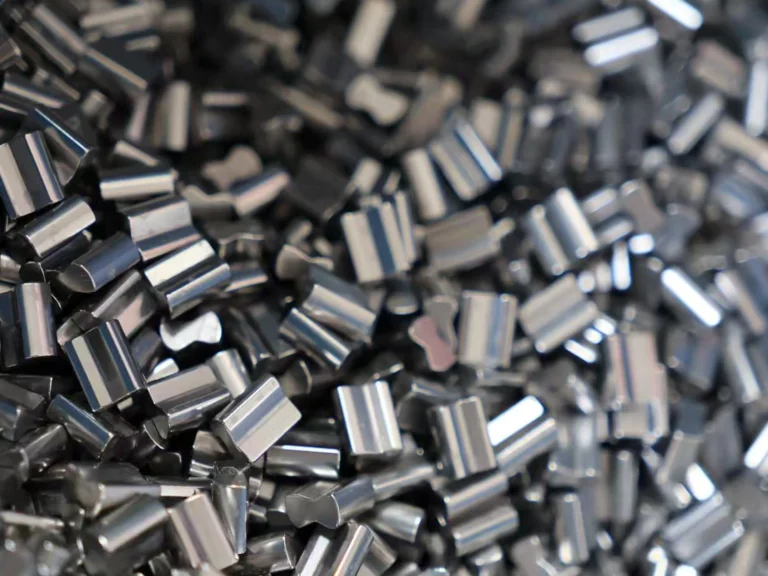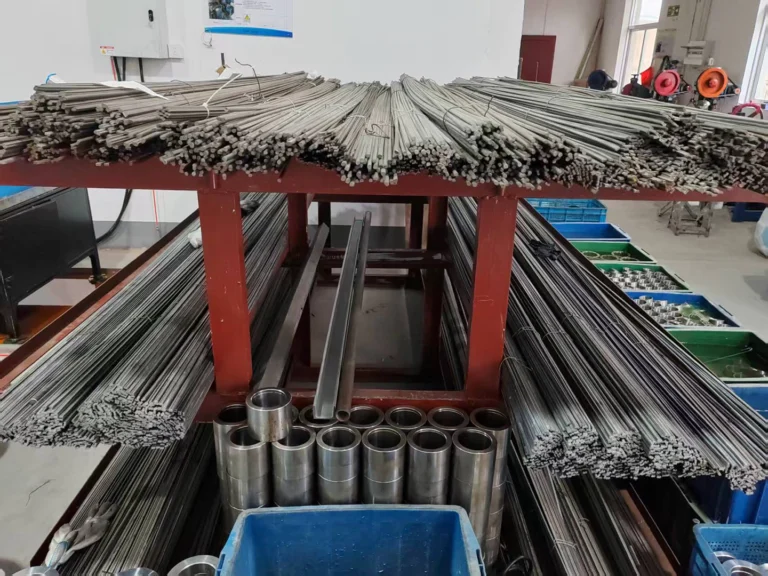

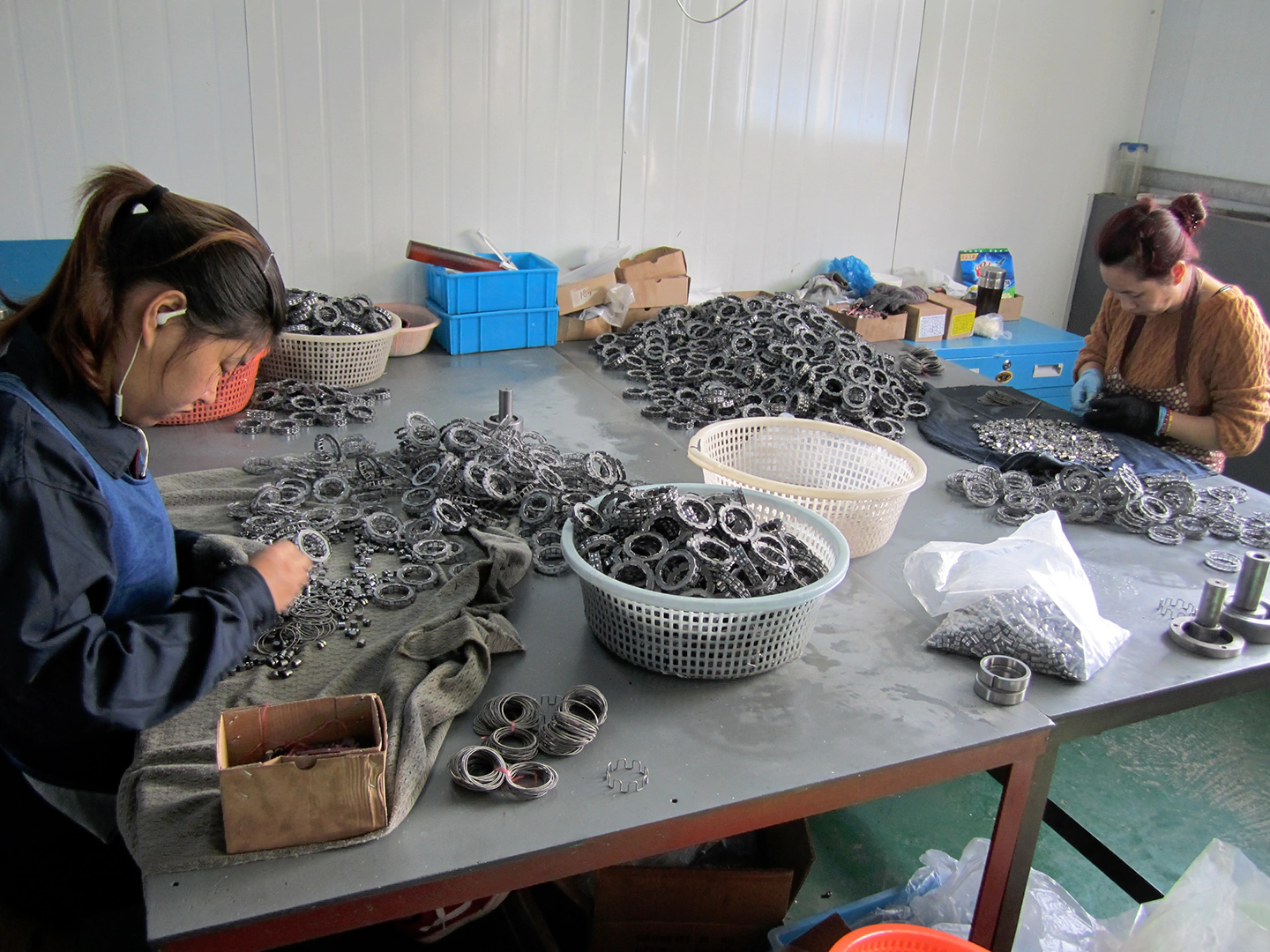
Transmission Sprag Clutch Outer Race Custom Fabrication: Engineering Specifications, Metallurgy, and High-Torque Precision Manufacturing
In heavy-duty automatic transmissions, powershift systems, and high-performance commercial drivelines, sprag-type one-way clutches represent a primary single point of mechanical vulnerability. When an outer race suffers catastrophic failure—whether via circumferential tensile cracking, case micro-spalling, or localized plastic deformation (Brinelling)—the secondary damage routinely exceeds tens of thousands of dollars in unscheduled downtime, planetary gear assembly destruction, and hydraulic fluid cross-contamination. Commercial transmission architectures, ranging from heavy earthmoving equipment to multi-speed automotive planetary gearboxes, demand sprag outer races that endure severe cyclical Hertzian stress, dynamic torsional shock, and aggressive thermal cycling without dimensional distortion.
At LST Sprag Clutch, custom fabrication of the sprag clutch outer race is engineered around exact kinematic profiles, tailored metallurgical case depths, and sub-micron dimensional precision. This technical pillar examines the core engineering methodologies, alloy selection criteria, heat treatment protocols, and precision machining workflows required to design and fabricate replacement and OEM-grade outer races capable of exceeding factory mean time between failures (MTBF).
1. Kinematic Mechanics and Stress Distribution in the Outer Race
A sprag one-way clutch transmits unidirectional torque through the camming action of asymmetrical sprags wedged between concentric cylindrical inner and outer races. When relative rotation occurs in the driving direction, the sprags tilt, expanding their effective diagonal dimension to engage the races through friction. In the overrunning (freewheeling) direction, the sprags disengage, ideally riding on a hydrodynamic oil film.
During maximum torque transmission, the sprag clutch outer race experiences intense internal radial outward forces, converting torque into severe hoop stress (circumferential tensile stress) and localized Hertzian contact pressure at every sprag-to-race contact zone. Standard commercial tubing or off-the-shelf bearing races cannot withstand these combined loading states without splitting, out-of-round deformation, or surface fatigue.
Key Contact Mechanics Formulae
The maximum Hertzian contact stress (( sigma_H )) developed between a cylindrical sprag cam profile (radius ( R_1 )) and the concave inner bore of the outer race (radius ( R_2 )) is calculated via:
sigma_H = sqrt{ frac{F_n}{pi cdot L} cdot frac{ frac{1}{R_1} – frac{1}{R_2} }{ frac{1 – nu_1^2}{E_1} + frac{1 – nu_2^2}{E_2} } }
Where:
- F_n: Normal contact force exerted by each sprag under peak torque (N)
- L: Effective axial contact length of the sprag (mm)
- R_1, R_2: Radii of curvature for the sprag contact surface and outer race ID (mm)
- nu_1, nu_2: Poisson’s ratio of the respective mating materials (typically 0.29–0.30 for alloy steel)
- E_1, E_2: Modulus of elasticity (typically 205–210 GPa for hardened alloy steels)
Concurrently, the tangential hoop stress (( sigma_theta )) acting across the outer race wall under internal sprag wedging pressure (( P_i )) is governed by Lamé’s equation for thick-walled cylinders:
sigma_theta(r) = frac{P_i cdot r_i^2}{r_o^2 – r_i^2} left( 1 + frac{r_o^2}{r^2} right)
Where ( r_i ) is the inner bore radius, ( r_o ) is the external diameter radius, and ( r ) is the specific radial coordinate through the wall thickness.
If the outer race wall lacks sufficient radial thickness, tensile yield strength, or uniform case hardening, the internal wedging pressure ( P_i ) will cause elastic expansion of the bore. This increases the operational wedging angle beyond the clutch’s critical strut angle, triggering instantaneous sprag rollover—a catastrophic failure mode characterized by immediate slip, extreme heat generation, and complete loss of drive engagement.
For custom fabrication projects, engineering teams must review the design using advanced non-linear Finite Element Analysis (FEA) to confirm that the outer race will not expand beyond permissible micrometer thresholds during transient torque spikes (such as wide-open-throttle gear shifts or sudden heavy-equipment bucket stall events).
2. Metallurgical Selection: Core Toughness vs. Surface Fatigue Resistance
The operational demands of a sprag outer race require a dual-property metallurgical structure: an ultra-hard, fatigue-resistant internal diameter (ID) track to endure sprag contact stresses exceeding 2,800 to 3,500 MPa, coupled with a ductile, impact-absorbing core to prevent catastrophic brittle fracture under shock-loading.
Selecting the correct raw alloy requires strict adherence to clean-steel standards (ASTM A295 / ASTM A534 for bearing-quality steels) to eliminate non-metallic inclusions (oxides, sulfides, silicates) that act as subsurface crack initiation sites under cyclic shear stress. Table 1: Metallurgical Comparison of Raw Materials for Sprag Clutch Outer Race Fabrication
| Material Grade | Standard Chemistry Highlights | Typical Core Hardness | Surface Hardness Capability | Charpy V-Notch Toughness (Core) | Target Application Profile |
|---|---|---|---|---|---|
| AISI / SAE 8620H | 0.18–0.23% C, 0.70–0.90% Mn, 0.40–0.70% Ni, 0.40–0.60% Cr, 0.15–0.25% Mo | 30–38 HRC | 60–63 HRC (Carburized) | 65–80 J @ 20°C | Light-to-medium automotive transmissions, passenger vehicles, standard industrial overrunning. |
| AISI / SAE 4320H | 0.17–0.22% C, 0.45–0.65% Mn, 1.65–2.00% Ni, 0.40–0.60% Cr, 0.20–0.30% Mo | 36–42 HRC | 60–64 HRC (Carburized) | 85–105 J @ 20°C | Heavy-duty commercial trucks, off-highway haulers, Allison transmission retrofits, severe shock loading. |
| AISI / SAE 9310 | 0.08–0.13% C, 0.45–0.65% Mn, 3.00–3.50% Ni, 1.00–1.40% Cr, 0.08–0.15% Mo | 38–44 HRC | 61–64 HRC (Carburized) | 110–130 J @ 20°C | Aerospace, high-stress defense drivelines, extreme torque racing, high-frequency shock cycles. |
| DIN 18CrNiMo7-6 (1.6587) | 0.15–0.21% C, 0.50–0.90% Mn, 1.40–1.70% Ni, 1.50–1.80% Cr, 0.25–0.35% Mo | 35–42 HRC | 60–63 HRC (Carburized) | 90–115 J @ 20°C | European heavy commercial (ZF architectures), heavy mining planetary drives, marine gears. |
| AISI / SAE 52100 | 0.98–1.10% C, 0.25–0.45% Mn, 1.30–1.60% Cr, ≤0.10% Mo | 58–62 HRC (Through-Hardened) | 58–62 HRC | 8–12 J @ 20°C (Brittle Core) | Static or smooth-running industrial applications; NOT recommended for shock-loaded automatic transmissions. |
Through-hardened steels like AISI 52100 lack the fracture toughness required for dynamic transmissions. When subjected to transient torsional spikes, 52100 outer races can split along the axial length due to zero core ductility. Consequently, [Sprag Type One-Way Clutches] fabricated by LST rely predominantly on vacuum-degassed, carburizing-grade nickel-chromium-molybdenum alloys (such as 4320H or 18CrNiMo7-6) to ensure crack-arresting core characteristics beneath a rock-hard outer raceway.
3. Heat Treatment Optimization: Case Depth, Austenite Retention, and Residual Stresses
Surface treatment failure accounts for more than 40% of non-wear-related clutch race breakdowns. The primary failure mechanisms are subsurface shear fatigue (leading to spalling or micro-pitting) and tensile residual stress cracking. Custom fabrication requires exacting heat treatment control to establish precise hardness gradients and deep compressive residual stresses.
Carburizing vs. Induction Hardening
While high-frequency induction hardening offers lower production cycle times, it frequently generates an abrupt hardness boundary between the case and the substrate, increasing the risk of case debonding or subsurface shear collapse under heavy sprag contact. Atmosphere or Low-Pressure Vacuum Carburizing (LPC) followed by high-pressure gas quenching yields a continuous, graduated carbon diffusion profile that mirrors the theoretical subsurface shear stress curve.
Depth of Maximum Subsurface Shear Stress
The peak orthogonal subsurface shear stress (( tau_o )) occurs at a depth (( z_o )) below the race inner diameter surface:
z_o approx 0.786 cdot b
Where ( b ) is the half-width of the Hertzian contact patch:
b = sqrt{ frac{4 cdot F_n}{pi cdot L} cdot frac{ frac{1 – nu_1^2}{E_1} + frac{1 – nu_2^2}{E_2} }{ frac{1}{R_1} – frac{1}{R_2} } }
To prevent shear failure at the case-core interface, the Effective Case Depth (ECD) (measured to 50 HRC according to SAE J423 / ISO 3754) must extend well beyond the depth of maximum shear stress, generally satisfying:
text{ECD} ge 2.5 times z_o Table 2: Heat Treatment and Case Hardening Process Parameters
| Process Parameter | Specification / Metric Range | Quality Standard / Test Protocol | Engineering Significance |
|---|---|---|---|
| Surface Hardness (ID) | 60–63 HRC (Convertible to 700–780 HV1) | ASTM E18 / ISO 6508-1 | Resists micro-plastic deformation and sprag indentation during dynamic wedging. |
| Effective Case Depth (ECD) | 1.2 mm to 2.2 mm (Application dependent) | SAE J423 (Hardness cut-off @ 50 HRC) | Pushes the transition boundary deeper than the dynamic subsurface shear stress zone. |
| Retained Austenite (RA) | < 10% to 15% Max (Sub-zero freeze treated) | ASTM E975 (X-Ray Diffraction) | Excessive RA (>20%) transforms to untempered martensite in service, causing volumetric expansion and dimensional drift. |
| Residual Surface Stress | -400 MPa to -750 MPa (Compressive) | X-ray diffraction / Barkhausen noise analysis | Directly suppresses the initiation and propagation of rolling contact fatigue (RCF) micro-cracks. |
| Microstructure Structure | Fine tempered martensite, Grade ≤ 3 carbides | ASTM E45 / ISO 5949 metallography | Eliminates continuous network intergranular carbides that cause brittle boundary flaking. |
Following carburizing and quenching, cryogenic stabilization treatment (-80°C to -196°C) is routinely executed on LST custom outer races to transform metastable retained austenite into stable martensite. A subsequent double or triple stress-relief temper at 160°C to 180°C relaxes structural strain without softening the matrix below the required 60 HRC floor.
4. Precision Machining, Superfinishing, and Geometric Dimensioning
Because the sprags within a one-way clutch rely on synchronous engagement, any geometric variation in the inner bore of the outer race produces non-uniform load distribution. If the race exhibits out-of-roundness, taper, or lobing, only a fraction of the sprag complement carries the incoming torque spike. This localized overload causes individual sprag collapse and accelerated race grooving.
Critical Engineering Principle: A 5 μm runout deviation across an outer race bore diameter can reduce total clutch torque transmission capacity by up to 35% due to uneven sprag cam lift angles across the circumference.
Hard Turning and CNC Internal Grinding
Following thermal processing, outer races undergo precision hard turning and multi-axis CNC internal grinding using Vitrified CBN (Cubic Boron Nitride) wheels. This process eliminates distortion induced during heat treatment and establishes precise geometric concentricity relative to external splines or mounting bolt circles.
Isotropic Superfinishing and Surface Tribology
A ground finish retains directional microscopic ridges (grinding lay) that can rupture the boundary lubrication film established by automatic transmission fluid (ATF). During the overrunning phase, high-asperity contact creates micro-scuffing, elevating steady-state operating temperatures.
To mitigate this, custom fabrication incorporates isotropic superfinishing (chemically accelerated vibratory polishing or micro-honing). This eliminates the directional grinding peaks, transforming the surface into a non-directional, plateaued profile with high lubricant-retention capability. Table 3: Dimensional Tolerances & Surface Topography: Standard Commercial vs. Custom Precision
| Geometric Dimension / Metric | Standard Commercial Grade | LST Custom Precision Specification | Operational Impact on Sprag Assembly |
|---|---|---|---|
| Inner Diameter (ID) Sizing Tolerance | IT7 (±0.015 mm / ±0.0006 in) | IT4 to IT5 (±0.004 mm / ±0.00015 in) | Eliminates variance in sprag wedging angle; balances load across all sprags. |
| Roundness (Circular Form) | ≤ 0.012 mm | ≤ 0.0025 mm (2.5 μm) | Prevents localized ovalization and single-sprag point overloading. |
| Cylindricity / Bore Taper | ≤ 0.015 mm over 50 mm length | ≤ 0.003 mm over 50 mm length | Ensures edge-to-edge axial contact along the complete sprag profile width. |
| Radial Runout (Bore to Spline Pitch Dia.) | ≤ 0.035 mm TIR | ≤ 0.008 mm TIR | Eliminates rotational eccentricity and transmission housing vibration. |
| Surface Roughness (Ra) | 0.40–0.60 μm (16–24 μin) | ≤ 0.10 μm (4 μin) (Isotropic Honed) | Lowers friction coefficient in overrunning mode; reduces fretting and wear. |
| Surface Roughness (Rz) | ≤ 2.5 μm | ≤ 0.8 μm | Removes micro-asperities capable of piercing thin transmission oil films. |
Machined components receive continuous verification via high-precision coordinate measuring machines (CMM) and Taylor Hobson roundness analyzers to ensure that each fabricated race strictly aligns with the required ISO dimensional classes before release.
5. Cross-Platform Architectural Compatibility and OEM Applications
Transmission designs vary widely based on their duty cycle, gear layout, and environmental demands. Custom race fabrication must account for specific interface geometries—such as external drive lugs, snap-ring retention grooves, involute splines, or integrated planetary carrier flanges.
LST provides specialized sprag clutch outer race custom engineering designed for direct integration across leading heavy-duty, off-highway, agricultural, and automotive transmission architectures:
- Heavy Earthmoving & Mining Platforms: Precision outer races engineered to handle extreme low-speed, high-torque conditions in Caterpillar powershift transmissions (e.g., 777, 785 series haulers; D8, D10 track-type tractors) and Komatsu wheel loaders/dumpers.
- Off-Highway Commercial Drivelines: Custom races manufactured to replace or upgrade OEM components in Volvo Construction Equipment, Massey Ferguson, and John Deere heavy agricultural equipment power reversers and PTO drivelines.
- Heavy Commercial Automatic Gearboxes: Direct-fit fabrication for Allison Transmission architectures (including 3000, 4000, and 5000 Series) as well as ZF industrial/commercial gearboxes (such as ZF Transmatic, EcoLife, and TraXon platforms).
- High-Speed Passenger & Commercial Vehicle Transmissions: Replacement and performance races designed for complex multi-speed automatic systems, including:
- Ford / GMC / Chevrolet: 6R80, 10R80, 4L80E, and Allison 1000/2000 retrofits.
- Volkswagen (VW) & Mercedes-Benz: Longitudinal and transverse high-torque automatic planetary systems.
- Cadillac, Buick, GMC, Jaguar, Bentley, & Mazda: Bespoke low-backlash, high-engagement sprag race assemblies customized for higher torque handling than factory stampings.
- Specialized Fluid Couplings: Systems incorporating Forward No.2 clutch packs and related reaction carrier components.
By engineering outer races to the exact splined tolerances (such as ANSI B92.1 or DIN 5480 spline standards), our manufacturing processes eliminate micro-movement at spline interfaces. This prevents fretting corrosion, a common failure mode in stock OEM stamped or thin-walled cast races.
6. Total Cost of Ownership (TCO) & Failure Mode Mitigation
For fleet operators, heavy equipment leasing companies, and industrial plant managers, the initial acquisition cost (CapEx) of a sprag clutch outer race represents less than 3% to 5% of the total financial exposure tied to a transmission overhaul. The true economic metric is Total Cost of Ownership (TCO), dominated by unbudgeted downtime, heavy rigging, logistics, and skilled teardown labor.
Comprehensive Life-Cycle Cost Comparison (50,000 Operating Hours)
Scenario A: Standard OEM Replacement (Stamped / Low-Alloy Induction Hardened)
- Initial Part CapEx: $450
- Expected Service Life: 8,000 – 12,000 Hours (Prone to early spalling and race distortion)
- Scheduled/Unscheduled Teardowns: 4 Overhauls across 50,000 operating hours
- Teardown & Rigging Labor Cost: 4 × $6,500 = $26,000
- Secondary Component Contamination Damage: $14,000 (average gear pack flushing and pump repairs)
- Fleet Revenue Loss (40 hours per event @ $250/hr): 4 × $10,000 = $40,000
- Total Lifecycle Operational Cost: $80,450
Scenario B: Custom Fabricated Carburized & Superfinished Outer Race (LST Precision 4320H)
- Initial Part CapEx: $1,250
- Expected Service Life: 25,000 – 35,000+ Hours
- Scheduled Teardowns: 1 Lifecycle Inspection Overhaul
- Teardown & Rigging Labor Cost: 1 × $6,500 = $6,500
- Secondary Component Contamination Damage: $0 (No catastrophic spalling)
- Fleet Revenue Loss: 1 × $10,000 = $10,000
- Total Lifecycle Operational Cost: $17,750
Net Lifetime Savings per Machine: $62,700 (78% Reduction in TCO)
Direct Prevention of High-Impact Failure Modes
- Elimination of Brinelling: By achieving a surface hardness of 62 HRC and ECD > 1.5 mm, contact stresses under shock loads do not exceed the yield point, preventing plastic indentation from sprag contact.
- Mitigation of Fretting and Galling: Isotropic finishing reduces surface asperities to ( R_a le 0.10 mutext{m} ), maintaining hydrodynamic fluid films even under high overrunning speeds (up to 8,500+ RPM in high-output automotive and industrial gearboxes).
- Prevention of Hoop Splitting: The high fracture toughness core of vacuum-degassed SAE 4320H or 18CrNiMo7-6 absorbs hoop tensile forces without micro-crack initiation across the component cross-section.
7. Quality Assurance, Compliance, and Metrological Testing
Every custom-fabricated outer race produced by LST is subject to stringent verification at every stage of production. Process monitoring follows IATF 16949 and ISO 9001 quality management systems to meet the safety and reliability requirements of mission-critical automotive and heavy-machinery assemblies.
Quality testing protocols include:
- Raw Material Traceability & Cleanliness: Heat-lot chemical verification via optical emission spectrometry (OES). Inclusion checks comply with ASTM E45 Method A to confirm micro-cleanliness.
- Non-Destructive Testing (NDT): Wet fluorescent magnetic particle inspection (MPI) per ASTM E1444 verifies that finished components are free of surface and near-surface cracks, seam tears, or quench defects.
- Grinding Burn Evaluation: High-precision internal grinding can create thermal burn defects that lower surface fatigue resistance. LST utilizes Barkhausen Noise Analysis (BNA) and nital etching per ISO 14104 / AGMA 2007 to confirm grinding integrity without damaging finished parts.
- Coordinate Metrology and CMM Profiling: Full 3D coordinate scanning confirms that outer race concentricity, internal spline profile alignment, and axial squareness comply with GD&T callouts within ±0.002 mm.
8. B2B Technical Procurement & Custom Engineering Checklist
When requesting an engineering review or procurement quote for [Transmission Sprag Clutch Outer Race Custom Fabrication], supply the following parameters to expedite technical review and finite element validation:
Technical Audit Form for Custom Outer Race Fabrication
- Operating Environment & Duty Cycle:
- Peak Torque Rating (Nm or lb-ft) and Shock Load Factor (Service factor ( K_a ge 1.5 text{ to } 3.0 )).
- Maximum Overrunning Speed (RPM) and Duration of Free-wheel Phase.
- Operating Temperature Range (°C) and Fluid Specification (e.g., ATF Type, TO-4, synthetic gear lube).
- Mating Component Geometry:
- Existing Outer Race Outer Diameter (OD), Inner Bore (ID), and Total Axial Width.
- Mounting Interface Style: Involute Spline (provide standard DIN/SAE DP, Module, Pressure Angle), External Keyways, Bolt Holes, or Friction-Fit Housing.
- Mating Sprag Complement Model (Sprag height, strut angle profile, cage arrangement).
- Substrate & Heat Treatment Preferences:
- Specified Alloy (e.g., 8620H, 4320H, 9310, 18CrNiMo7-6, or LST engineering recommended).
- Required Effective Case Depth (ECD at 50 HRC).
- Special requirements: Sub-zero cryogenic stabilization, isotropic superfinish, black oxide, or manganese phosphating.
- Production Batch Requirements:
- Prototype / Emergency Breakdown Quantities (1 to 25 units).
- Scheduled Production Runs (100 to 10,000+ units annual blanket contract).
- Certification Requirements: Material Test Reports (MTR 3.1), CMM Inspection Reports, Hardness Traverse Charts, NDT MPI Certifications.
9. Frequently Asked Questions (FAQ)
Can a worn transmission sprag clutch outer race be repaired by re-grinding and hard chrome plating?
No. Hard chrome plating or thermal spray reclamation is not recommended for high-torque sprag clutch outer races. The intense localized Hertzian stress generated by sprag wedging action (often >3,000 MPa) will cause mechanical delamination of the plated interface. Moreover, grinding through the carburized case depth to accommodate plating removes the compressive residual stress layer, resulting in rapid subsurface shear failure. A custom-fabricated, solid-alloy outer race is the only reliable engineering solution for long-term transmission integrity.
What is the minimum recommended wall thickness for a high-torque outer race?
While the minimum thickness depends on internal bore diameter and peak torque ratings, a reliable engineering baseline requires the radial wall thickness to measure at least 1.5 to 2.0 times the sprag radial height. If housing envelopes require a thinner wall, high-modulus, high-toughness nickel alloys such as SAE 9310 or 4320H must be paired with low-pressure vacuum carburizing to sustain hoop stress without bore expansion.
Why does an outer race fail after a relatively short period even when the surface hardness tests at 60 HRC?
Surface hardness is only one metallurgical metric. Premature failures with correct surface hardness typically point to three underlying root causes: (1) Insufficient Effective Case Depth (ECD), allowing the peak subsurface shear stress to land in the softer core metal; (2) Excessive Retained Austenite (>25%), which plastically deforms and alters the internal race diameter under load; or (3) Excessive Bore Runout / Non-Cylindricity, causing two or three individual sprags to absorb the total system torque load, exceeding the dynamic capacity of the raceway.
How does surface roughness (Ra) affect sprag clutch freewheeling life?
During the freewheeling (overrunning) phase, the sprags glide over an elastohydrodynamic lubrication (EHL) oil film. A rough surface (e.g., ( R_a > 0.40 mutext{m} )) breaks through this micro-film, causing direct metal-to-metal contact, increased hydrodynamic drag, and localized frictional heating. Isotropic superfinishing to ( R_a le 0.10 mutext{m} ) preserves the hydrodynamic film, minimizes overrunning friction, and prevents fretting and surface micro-pitting over millions of rotation cycles.
10. Summary and Engineering Consultation
The transmission sprag clutch outer race is an engineered, mission-critical component that operates under combined mechanical, thermal, and tribological stresses. Off-the-shelf catalog solutions and substandard copy parts often fail to meet the material purity, case depth profiles, and micron-level geometric tolerances required for demanding heavy equipment and automotive drivelines. Specifying custom-fabricated outer races engineered from vacuum-degassed carburizing alloys dramatically increases transmission MTBF, safeguards downstream planetary gearing, and delivers long-term reductions in total cost of ownership.
Optimize your transmission durability with specialized manufacturing: Consult with the design and metallurgy team at LST Sprag Clutch. Whether you require precision replacement races for high-horsepower commercial fleets, heavy-duty mining machinery, or specialized automotive transmissions, our custom fabrication services deliver components engineered to your operating specifications. Contact our engineering team today to review technical drawings, FEA load models, and tailored production schedules.